

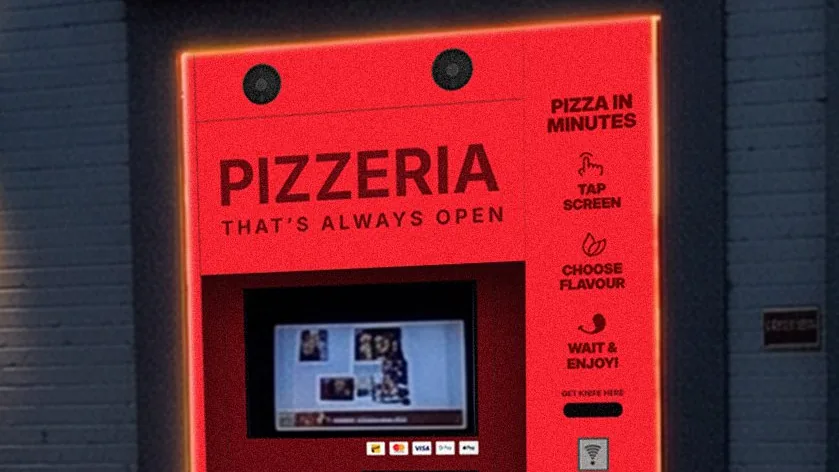
Pizza 13 was the first operator to launch on the PFX white-label program: its own brand on the wrap, its own recipes in the kiosk and PFX automation doing the baking, around the clock. In its first 60 days in New Brunswick, Canada, the kiosk sold 2,500 pizzas.
Here's what made the launch work, and the parts of it any operator can copy.
A brand people already knew
Pizza 13 didn't launch a new name. The kiosk carries the same brand and the same recipes its customers already trusted, so the first order felt familiar rather than experimental. That's the core idea of white-label: the kiosk extends your pizzeria instead of competing with it.
Open when the kitchen is closed
A kiosk earns the most in the hours a traditional kitchen can't cover. Late nights, early mornings and weekends are when a 24/7 unit has the street to itself.
Recipes tuned for the oven
Before launch, every PFX operator's pizzas go through recipe testing, so each one bakes properly in the kiosk's pulsed-air convection oven. Getting that right up front is what keeps customers coming back.
What you can copy
- Lead with your own brand. Put the name and menu your customers already know on the wrap.
- Pick a site with traffic at off-hours. The busiest times for a kiosk are often the quietest for a storefront.
- Tell people it's there. A launch post, signage in your restaurant and a special for the first week all help a new kiosk get found.
- Watch the data. Cloud-based management shows what's selling and when, so you can adjust your mix and restocking.
Hear it from Antoine
Antoine Attard of Pizza 13 talks through the switch to automation in his own words on our Testimonials page.
Thinking about launching your own brand on PFX? Let's talk.